
Many injection molders struggle with unstable nozzle temperature, plastic drooling and high reject rates when producing precision automotive plastic parts. One of our customers, an automotive component manufacturer in Southeast Asia, faced this common challenge on their multi-cavity hot runner mold.
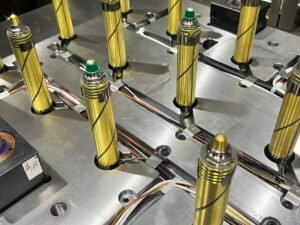
Customer Challenge
The customer ran a 16-cavity mold for automotive connector housings. Their original hot runner nozzle heaters had two main problems:
- Uneven heat distribution caused plastic drooling at the gate, leading to burrs and part rejection.
- Short service life; heaters burned out frequently, which stopped production and raised downtime cost.
They needed a reliable heater with stable temperature output, good oxidation resistance and custom dimensions to match their existing hot runner nozzles.
Our Solution
Our engineering team reviewed the hot runner structure, operating temperature and watt density requirement. We recommended a custom brass nozzle band heater.
- Brass sheath for fast heat transfer and uniform temperature
- Built-in thermocouple for accurate temperature monitoring
- Custom inner diameter, width and lead wire style to fit their nozzles
- CE compliant, high temperature resistant design
Result After Installation
After switching to our brass band heaters:
✅ No more frequent drooling and gate defects
✅ Reject rate dropped obviously
✅ Heater service life extended greatly
✅ Production runs more stable with less manual temperature adjustment
This case proves brass nozzle band heaters are a cost-effective choice for precision hot runner molding, especially for automotive, electronics and packaging plastic parts.
If you also meet hot runner heating problems, send us your nozzle drawing and working requirement. We can provide custom heating solutions for your mold.
